
Best New York Cheesecake is a creamy, decadent dessert that embodies the essence of comfort food. This classic dish features a rich cream cheese filling, all encased in a buttery graham cracker crust, transporting you straight to the heart of New York with each bite. Whether you’re celebrating a special occasion or simply indulging in a sweet treat, this cheesecake is sure to impress. With its smooth texture and delightful flavor, it’s a perfect dessert for family gatherings, holiday parties, or just a cozy night in. In this article, we’ll provide a detailed step-by-step guide to making this sumptuous dessert from scratch.
Ingredients
To craft the perfect New York Cheesecake, you’ll need a selection of high-quality ingredients that blend harmoniously:
- 180 g Graham crackers (about 12 rectangle sheets) – These will form the crispy, buttery base of your cheesecake, offering a delightful crunch.
- 2 Tablespoons Granulated sugar – A touch of sweetness that will enhance the flavor of the crust.
- 100 g Unsalted butter – Rich and creamy, it adds depth to the crust and provides the right texture.
- Some Additional unsalted butter to coat the pan – This ensures your cheesecake comes out effortlessly.
- 905 g Full-fat Cream cheese – The star of the show; its creamy richness creates that signature cheesecake texture.
- 250 g Granulated sugar – Sweetens the creamy filling, balancing out the tang of the cream cheese.
- 250 g Sour cream – Adds a tangy flavor and rich creaminess, making the filling deliciously smooth.
- 180 g Heavy cream – For a luscious, velvety texture in the cheesecake.
- 16 g Cornstarch – Helps stabilize the filling and give it a perfect structure.
- 50 g Egg yolk – Provides richness and color to the cheesecake filling.
- 165 g Whole egg – Adds moisture and body to the batter.
- 2 teaspoons Vanilla extract – Infuses a warm, aromatic quality that enhances the flavor profile.
- 2 teaspoons Lemon juice – A hint of acidity that brightens the dessert and complements the cheese.
Step-by-Step Directions
-
Prepare the Cream Cheese: Begin by leaving the cream cheese at room temperature until it becomes soft. This ensures a smooth batter without lumps.
-
Prepare Water Bath: Preheat your oven and prepare hot water for the water bath, which will keep the cheesecake moist and help it bake evenly.
-
Melt the Butter: In a small saucepan or microwave-safe bowl, melt the unsalted butter.
-
Coat the Pan: Generously coat a 9-inch springform pan with a thin layer of the melted butter. This crucial step helps the cheesecake release easily after baking.
-
Prepare the Crust: Crush the graham crackers in a ziplock bag using a rolling pin, leaving some larger pieces for added texture. In a bowl, mix the crushed crackers with the melted butter and granulated sugar until evenly combined. Press this mixture firmly into the bottom of the pan using a solid object, like a measuring cup, to form a stable crust.
-
Optional Baking Step: For a sturdier crust, bake it in a preheated oven at 340ºF (171ºC) for about 7-8 minutes until it’s lightly golden. Allow it to cool before adding the filling.
-
Mix the Filling: In a large mixing bowl, beat the softened cream cheese until completely smooth. Gradually add granulated sugar and continue mixing until well combined.
-
Incorporate Cream & Egg Mixture: Mix in the sour cream and heavy cream. Scrape the sides and bottom of the bowl frequently to ensure an even mixture. Add cornstarch, egg yolks, and whole eggs, mixing until just incorporated, being careful not to whip air into the batter.
-
Add Flavorings: Pour in the vanilla extract and lemon juice, mixing until combined. Again, ensure the mixture is well blended by scraping the bowl.
-
Baking the Cheesecake: Pour the cheesecake batter into the prepared crust. Place a thin towel or kitchen paper in a roasting pan, setting the cheesecake pan on top of it. Fill the roasting pan with hot water, reaching about one-third of the height of the springform pan. Bake at 340ºF (171ºC) for the first 30 minutes, then lower to 310ºF (154ºC) for another 65-75 minutes. The cheesecake should wobble slightly in the center, resembling pudding when it’s done.
-
Cooling Process: Turn off the oven, crack the door open about an inch, and let the cheesecake cool for 30 minutes inside. This gradual cooling helps prevent cracks.
-
Chill: Once cooled, place the cheesecake on a wire rack to cool completely before refrigerating. Chill for at least 6 hours, preferably overnight, to allow the flavors to meld.
-
Removing from the Pan: To release the cheesecake, carefully insert a small cake spatula or knife between the cheesecake and the sides. Remove the sides of the springform pan first, then gently detach the bottom using a spatula. Finally, transfer the cake to your serving plate.
Tips & Tricks
- Ensure all ingredients are at room temperature for optimal blending and a smooth batter.
- Avoid overmixing once eggs are added; this helps minimize cracks on the surface.
- An aluminum foil lining around the springform pan protects against water leaks, ensuring a nice crust.
Serving Suggestions & Pairings
Pair your delectable New York Cheesecake with fresh fruits like strawberries, blueberries, or even a drizzle of chocolate sauce. Serve it alongside a cup of strong coffee or a glass of dessert wine for a delightful end to any meal. It’s also a fantastic choice for birthday celebrations or holiday gatherings, adding a touch of elegance to your dessert table.
Nutritional Information
Each slice of New York Cheesecake typically contains around 450-500 calories, providing a rich source of fats and carbohydrates. While it’s a delicious indulgence, remember to enjoy it in moderation. It’s always a good idea to balance such treats with a healthy diet to maintain overall wellness.
Storing Tips & Variations
Store leftover cheesecake in an airtight container in the refrigerator for up to a week. For longer storage, you can freeze slices wrapped in plastic wrap, then aluminum foil, for up to 2-3 months. Thaw in the refrigerator before serving. You can also experiment with flavors by adding chocolate, caramel, or fresh fruit into the cheesecake mixture.
Conclusion
Now that you have the complete guide to crafting a delightful New York Cheesecake, don’t hesitate to try making this classic dessert at home. It’s an experience that rewards you with luscious flavors and a beautiful presentation. Share your cheesecake-making journey with friends and family, and enjoy the sweet satisfaction of creating something wonderful!
FAQs
-
Can I use low-fat cream cheese?
- While low-fat cream cheese can be used, the texture and richness of the cheesecake may be affected. For best results, stick with full-fat cream cheese.
-
What can I substitute for the sour cream?
- Greek yogurt makes a great substitute for sour cream, adding similar creaminess and tang to your recipe.
-
Can I bake the cheesecake without a water bath?
- It is recommended to use a water bath for even cooking and to prevent cracks. However, if you bake without one, just be cautious with baking time, and watch for cracks.
-
How do I know when the cheesecake is done?
- The cheesecake should wobble slightly in the center when gently tapped. If the edges are set but the center jiggles, it is likely done.
-
How can I enhance the flavor of my cheesecake?
- Adding a tablespoon of almond extract or using flavored cream cheese can elevate the taste. Topping with fruit compote or a drizzle of caramel sauce can also enhance the experience.
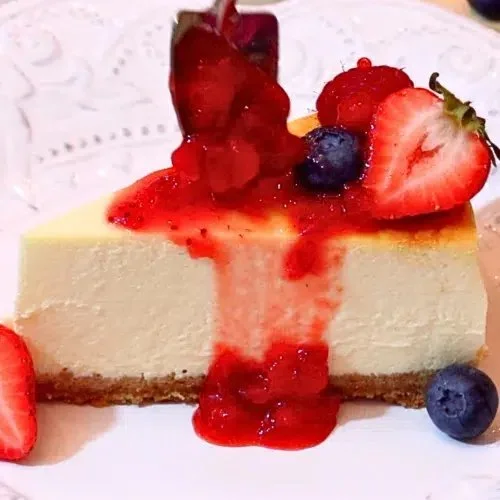
New York Cheesecake
Ingredients
Method
- Leave the cream cheese at room temperature until it becomes soft.
- Preheat your oven and prepare hot water for the water bath.
- In a small saucepan or microwave-safe bowl, melt the unsalted butter.
- Generously coat a 9-inch springform pan with a thin layer of the melted butter.
- Crush the graham crackers and mix with melted butter and sugar. Press into the pan to form a crust.
- Optionally bake the crust at 340ºF (171ºC) for 7-8 minutes until lightly golden.
- In a large mixing bowl, beat the softened cream cheese until smooth. Gradually add sugar.
- Mix in sour cream and heavy cream, scraping the bowl frequently.
- Add cornstarch, egg yolks, and whole eggs, mixing until just incorporated.
- Stir in vanilla extract and lemon juice until combined.
- Pour the batter into the crust. Place the springform in a roasting pan with hot water.
- Bake at 340ºF (171ºC) for 30 minutes, then lower to 310ºF (154ºC) for 65-75 minutes.
- Turn off the oven and leave the cheesecake inside with the door cracked for 30 minutes to cool.
- Cool completely before refrigerating for at least 6 hours or overnight.
- To release, use a spatula to carefully detach the cheesecake from the pan.
- Transfer to a serving plate and enjoy!


Leave a Reply