
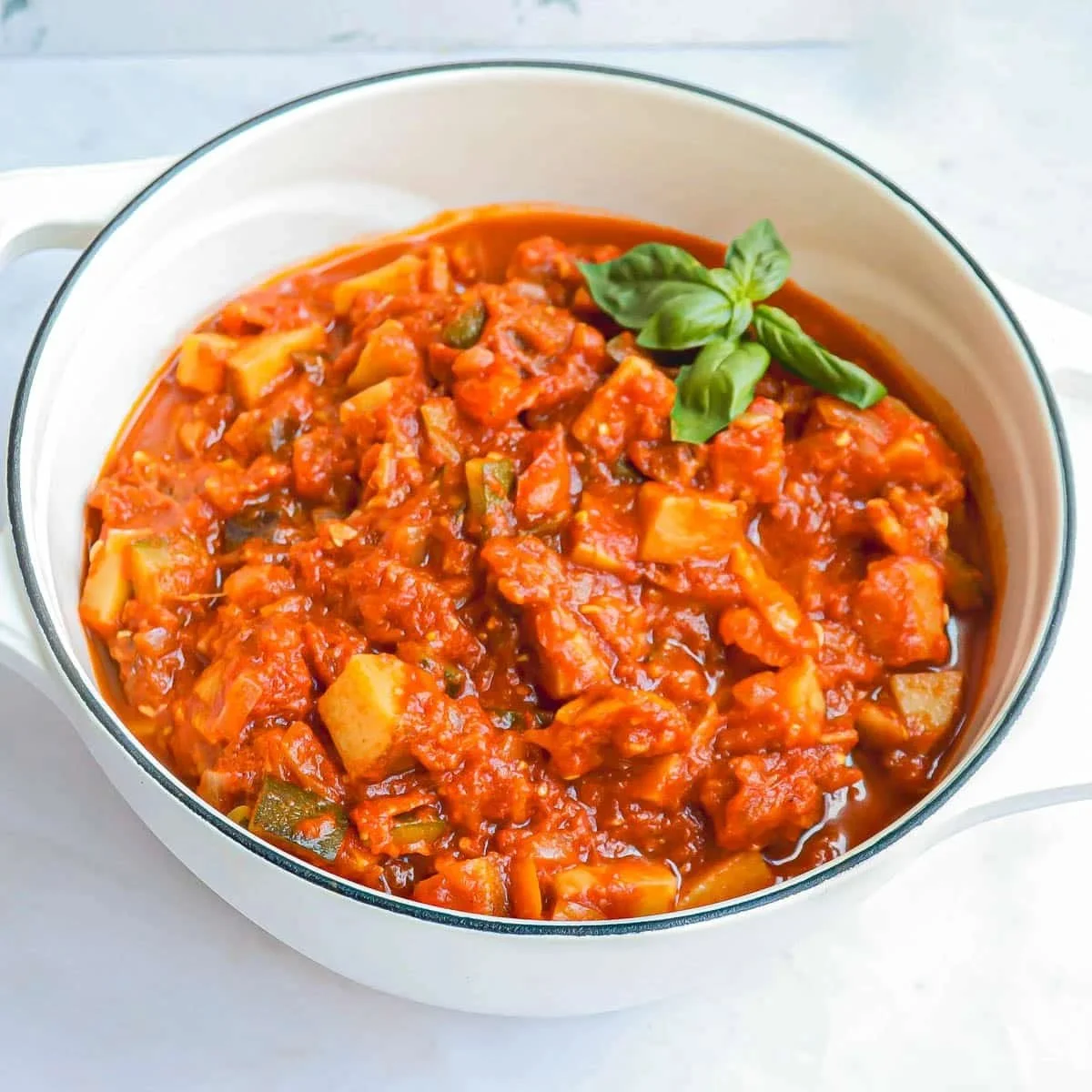
Classic Ciambotta is a heartwarming dish that transports you to the sun-kissed hills of Southern Italy with each bite. This hearty vegetable stew is a mosaic of colorful, fresh vegetables that dance together in a fragrant tomato broth, creating a comforting meal that is both nourishing and satisfying. It’s easy to make, family-friendly, and embodies the essence of rustic Italian cooking. Perfect for a cozy night in or a gathering with friends, this recipe is a delightful mix of textures and flavors that bring a taste of la dolce vita to your table. In today’s post, we will take you through the step-by-step process to prepare Classic Ciambotta, ensuring that you can recreate this dish effortlessly.
Ingredients
To bring this vibrant vegetable stew to life, you will need the following fresh ingredients:
- 1 medium eggplant – This creamy vegetable provides a lovely texture and absorbs the flavors beautifully, cut into 1-inch pieces.
- 1 large zucchini or yellow summer squash – Juicy and tender, cut into 1-inch pieces for that fresh bite.
- Kosher salt – Essential for salting the eggplant and zucchini, enhancing their flavors.
- 4 tablespoons extra-virgin olive or avocado oil – The base that brings a rich, aromatic depth to the dish.
- 1 white or yellow onion – Finely chopped to add a sweet, savory depth.
- 5 cloves garlic – Minced for that irresistible garlicky aroma.
- 2 large potatoes – Unpeeled and cut into 1/2-inch cubes, adding heartiness to the stew.
- 1 large red or yellow bell pepper – Craving those vibrant colors, seeds removed and cut into 1-inch pieces.
- 28 ounces crushed tomatoes – Infusing the dish with a rich, tangy sweetness.
- 1 cup vegetable broth – Provides depth; increase to 2 cups if using 14 ounces of crushed tomatoes.
- 1 pint cherry or grape tomatoes – Halved lengthwise for a burst of sweetness.
- 1/4 cup chopped basil & 1/4 cup chopped parsley leaves – Fresh herbs to brighten the stew.
- Salt and pepper – To taste, ensuring all flavors pop.
- Optional garnish: Parmesan or vegan Parmesan for a creamy finish.
Step-by-Step Directions
To start, place the eggplant and zucchini pieces in a colander and generously sprinkle them with kosher salt. This step will draw out excess moisture and help intensify their flavors. Let them sit for 30 minutes, then rinse and pat dry.
In a large, heavy-bottomed pot or Dutch oven, heat 1 tablespoon of oil over low to medium heat. Add the finely chopped onion and sauté until translucent, about 5-7 minutes. Once they soften, add the minced garlic and sauté until fragrant and lightly browned, about 2 minutes. Set these aromatic vegetables aside.
Next, heat another tablespoon of oil in the same pot and add the cubed potatoes. Cook them, stirring occasionally, until they start to brown and soften, about 10 minutes. Once done, remove the potatoes and set them aside.
Now, it’s time to cook the eggplant. Add a bit more oil if necessary, then toss in the eggplant. Sauté until it is golden and tender, approximately 8-10 minutes, then remove it from the pot.
Repeat this sautéing process with the zucchini, cooking until slightly browned, followed by the bell peppers, which should soften and brown slightly, about 5-7 minutes each.
Return all the sautéed vegetables—onions, garlic, potatoes, eggplant, zucchini, and bell peppers—to the pot. Pour in the crushed tomatoes and vegetable broth, then add the halved cherry or grape tomatoes. Stir everything together.
Cook uncovered over medium-low heat for about 30-40 minutes, stirring occasionally until the vegetables are tender and the flavors have melded beautifully. If the stew appears too watery, increase the heat slightly and cook for a few extra minutes, stirring frequently.
When you’re almost ready to serve, stir in the chopped basil and parsley for a fresh touch. Taste your Ciambotta and adjust the seasoning with salt and pepper if needed. Serve hot, garnished with a sprinkle of extra basil and parsley, alongside grated Parmesan or vegan Parmesan if desired.
Tips & Tricks
For an extra depth of flavor, try adding a splash of balsamic vinegar or a pinch of red pepper flakes for heat. If you’re feeling adventurous, incorporating other seasonal vegetables like carrots or green beans can add variety. Always taste frequently during cooking to ensure the flavors are just right!
Serving Suggestions & Pairings
Classic Ciambotta is versatile and makes a wonderful main dish or a side. Serve it over a bed of creamy polenta or alongside crusty bread for a complete meal. A fresh arugula salad with lemon vinaigrette offers a perfect balance to the stew’s heartiness. This dish is ideal for casual family dinners, cozy gatherings, or even as a delightful addition to a potluck.
Nutritional Information
This dish is not only delicious but also packed with nutrients. Each serving contains approximately 250 calories, with the majority coming from the vegetables and healthy fats from the olive oil. Ciambotta is rich in fiber, vitamins, and minerals, making it a balanced option that supports a healthy diet.
Storing Tips & Variations
Classic Ciambotta can be made ahead of time, and leftovers keep well in the refrigerator for up to 5 days. To reheat, simply warm it in a pot over low heat, adding a splash of broth if needed to loosen it up. It also freezes beautifully for up to 3 months—just pack it into airtight containers.
For variations, consider adding protein such as chickpeas or cannellini beans for a heartier dish. You can also switch up the herbs, using thyme or oregano for different flavor profiles.
Conclusion
Classic Ciambotta is a dish that brings joy and warmth to any table. With its vibrant colors, wholesome ingredients, and rich flavors, it’s a recipe well worth trying. We encourage you to make this stew and savor its comforting hug of flavors. After you’ve enjoyed crafting this delightful dish, please share your experience and any variations you made!
FAQs
1. Can I use frozen vegetables for this recipe?
While fresh vegetables provide the best flavor and texture, you can use frozen vegetables if you’re short on time. Just be sure to thaw them first.
2. Is Ciambotta gluten-free?
Yes, all the ingredients listed are naturally gluten-free, making it suitable for those with gluten sensitivities.
3. How can I add more protein to Ciambotta?
You can easily incorporate protein by adding canned beans like chickpeas or kidney beans. For a meaty version, diced chicken thighs or Italian sausage could also work well.
4. Can I make this Ciambotta spicy?
Absolutely! Adding crushed red pepper flakes, diced jalapeños, or a splash of hot sauce can bring some heat to the dish.
5. What is the best way to serve Classic Ciambotta?
Serve it hot, garnished with fresh herbs, and offer crusty bread or a side of rice or polenta for a complete meal. Enjoy it wine or a refreshing non-alcoholic beverage to balance the flavors!
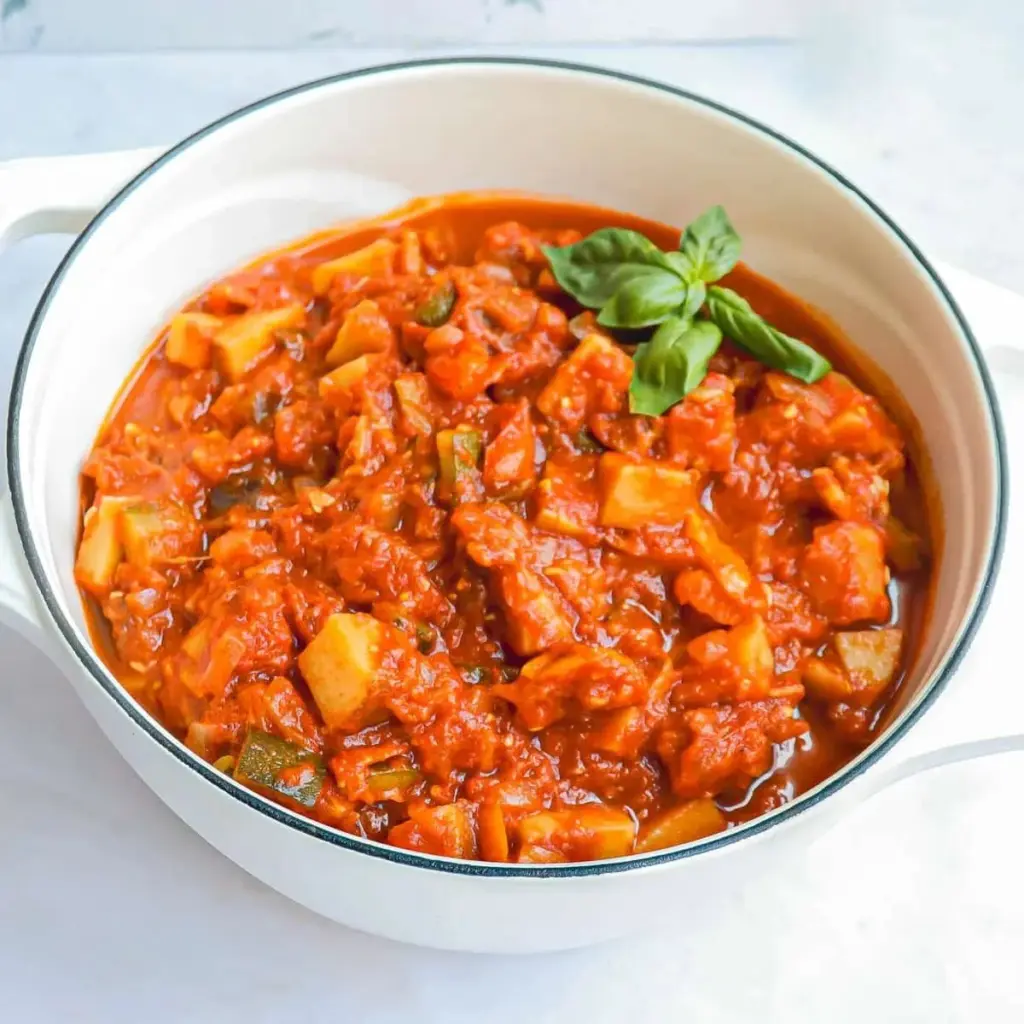
Classic Ciambotta
Ingredients
Method
- Place the eggplant and zucchini in a colander and sprinkle generously with kosher salt. Let them sit for 30 minutes to draw out moisture, then rinse and pat dry.
- In a large pot or Dutch oven, heat 1 tablespoon of oil over low to medium heat. Add chopped onion and sauté until translucent, about 5-7 minutes. Then add minced garlic and sauté until fragrant, about 2 minutes. Set aside.
- Heat another tablespoon of oil in the pot, add cubed potatoes, and cook until slightly browned, about 10 minutes. Remove and set aside.
- Sauté the eggplant until golden and tender, about 8-10 minutes, then remove from the pot.
- Sauté the zucchini and bell peppers until browned and tender, about 5-7 minutes each.
- Return all sautéed vegetables to the pot, add crushed tomatoes, vegetable broth, and halved cherry tomatoes. Stir to combine.
- Cook uncovered over medium-low heat for about 30-40 minutes, stirring occasionally, until vegetables are tender. Adjust heat if the stew is too watery.
- Stir in chopped basil and parsley before serving. Adjust seasoning with salt and pepper as needed.
- Serve hot, garnished with extra herbs and optional Parmesan.



Leave a Reply